




What non - destructive testing methods are suitable for INCOLOY 800H seamless tube?
 Jun 11, 2025|
 Hey there! I'm a supplier of INCOLOY 800H seamless tubes. These tubes are pretty amazing, known for their excellent corrosion resistance, high - temperature strength, and good fabricability. But, to ensure that the INCOLOY 800H seamless tubes we supply meet the high - quality standards, non - destructive testing (NDT) methods are super important. In this blog, I'll share with you some suitable NDT methods for INCOLOY 800H seamless tubes.
1. Ultrasonic Testing (UT)
Ultrasonic testing is a widely used NDT method. It works by sending high - frequency sound waves into the material. When these sound waves encounter a defect, like a crack or an inclusion, part of the wave is reflected back. By analyzing the reflected waves, we can figure out the location, size, and shape of the defect.
For INCOLOY 800H seamless tubes, UT is great because it can detect internal defects that are not visible from the outside. It can find flaws deep within the tube wall, such as porosity or laminations. This is crucial as these internal defects can weaken the tube and reduce its service life.
One of the advantages of UT is its high sensitivity. It can detect very small defects, which is essential for ensuring the quality of the tubes. Also, it's a fast method, so we can test a large number of tubes in a relatively short time. However, it requires a skilled operator to interpret the results accurately. You can learn more about nickel - based tubes like these at Nickel Alloy Steel Tube.
2. Eddy Current Testing (ECT)
Eddy current testing is another effective NDT method for INCOLOY 800H seamless tubes. It's based on the principle of electromagnetic induction. When an alternating current is passed through a coil near the tube, it creates an alternating magnetic field. This magnetic field induces eddy currents in the tube.
If there's a defect in the tube, the flow of the eddy currents is disrupted, and this change can be detected by measuring the impedance of the coil. ECT is mainly used to detect surface and near - surface defects, such as cracks or pits.
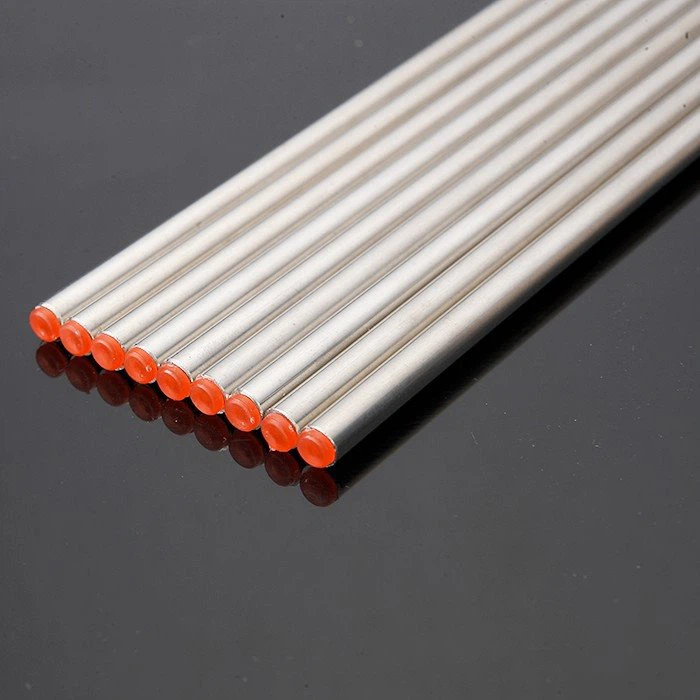

It's a very convenient method as it doesn't require any direct contact with the tube surface. We can perform the test quickly and without any coupling agents (like in UT). Also, it can be easily automated, which is great for mass production. But, ECT has some limitations. It's mainly sensitive to surface and near - surface defects, and it may not be very effective for detecting internal defects deep within the tube. You might be interested in other seamless tubes too, like UNS N06625 Seamless Tube.
3. Magnetic Particle Testing (MPT)
Magnetic particle testing is suitable for INCOLOY 800H seamless tubes that are ferromagnetic. Although INCOLOY 800H has relatively low magnetic properties, in some cases, MPT can still be used.
The process involves magnetizing the tube and then applying magnetic particles (either dry or in a liquid suspension) to the surface. If there's a surface or near - surface defect, the magnetic field is distorted, and the magnetic particles will accumulate at the defect site, making it visible.
MPT is easy to perform and can quickly show the location of surface cracks. It's also very cost - effective. But, it's limited to ferromagnetic materials and can only detect surface and near - surface defects.
4. Liquid Penetrant Testing (LPT)
Liquid penetrant testing is a simple yet effective way to detect surface - open defects in INCOLOY 800H seamless tubes. First, a liquid penetrant is applied to the tube surface. The penetrant seeps into the surface cracks or pores. After a certain period, the excess penetrant is removed, and a developer is applied.
The developer draws the penetrant out of the defects, making them visible as bright indications. LPT can detect very small surface cracks that might be missed by the naked eye. It's a relatively inexpensive method and doesn't require any special equipment other than the penetrant and developer materials.
However, it only works for surface - open defects. It can't detect internal defects. And, the process is a bit time - consuming as it involves several steps like cleaning, applying the penetrant, waiting for the penetrant to seep in, removing the excess, and then applying the developer. You can explore more about INCOLOY - related tubes at UNS N08800 Nickel Alloy Tube.
5. Radiographic Testing (RT)
Radiographic testing uses X - rays or gamma rays to create an image of the internal structure of the INCOLOY 800H seamless tube. When the rays pass through the tube, they are absorbed differently by the material and any defects present. The rays then expose a film or a digital detector, creating an image that shows the internal features of the tube.
RT is very effective for detecting internal defects, such as internal cracks, voids, or inclusions. It provides a clear picture of the internal structure, which can be used for detailed analysis. But, it has some drawbacks. It's expensive because it requires special equipment and radiation - shielding facilities. Also, there are safety concerns associated with working with radiation, so strict safety protocols need to be followed.
Choosing the Right Method
When it comes to choosing the right NDT method for INCOLOY 800H seamless tubes, several factors need to be considered. The type of defect we're looking for is a major factor. If we suspect internal defects, UT or RT might be the best choices. For surface and near - surface defects, ECT, MPT, or LPT can be used.
The size of the tubes also matters. For large - diameter tubes, some methods might be more practical than others. The production volume is another consideration. If we're producing a large number of tubes, we need a fast and efficient method, like ECT or UT.
In many cases, a combination of NDT methods is used to ensure comprehensive testing. For example, we might start with ECT to quickly scan the tubes for surface and near - surface defects and then use UT to check for internal defects in the tubes that show potential problems.
Conclusion
As a supplier of INCOLOY 800H seamless tubes, I understand the importance of ensuring the quality of our products. Non - destructive testing methods play a crucial role in this process. By using the appropriate NDT methods, we can detect defects early, ensure the safety and reliability of the tubes, and meet the high - quality standards required by our customers.
If you're in the market for high - quality INCOLOY 800H seamless tubes or have any questions about NDT methods, feel free to reach out to start a procurement discussion. We're here to provide you with the best products and services.
References
- ASME Boiler and Pressure Vessel Code, Section V - Nondestructive Examination
- ASTM Standards related to Non - destructive Testing of Metals
- "Non - destructive Testing Handbook" by the American Society for Nondestructive Testing (ASNT)