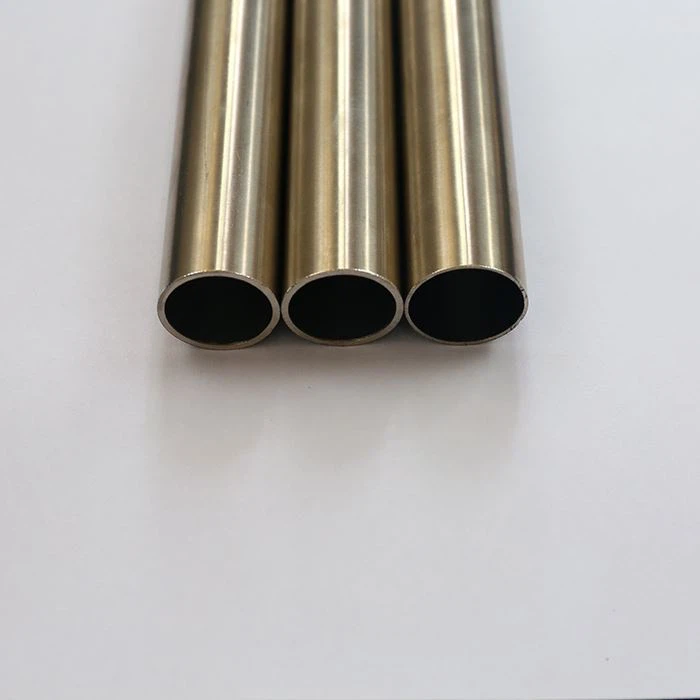
Q: What is stainless steel seamless tube used for?
A: Heat exchanger. Fertilizer industry. Power Generation Industry and Environmental Technologies. Chemical and Petrochemical Industries. Curate Ship-building Parts for International Clients. Oil and gas Industries. Engineering and Construction Industry. Automotive Industry.
Q: What is the ASTM for stainless steel seamless tube?
A: ASTM A312 is a specification for seamless and welded austenitic stainless steel pipes that perform well in high temperature and corrosive environments. The common grades for this specification are 304/304L and 316/316L.
Q: How do you make stainless steel seamless tubes?
A: Preparing the stainless steel tubes. The stainless steel tubes undergo several checks before getting picked to roll. Rolling through rollers. Rollers Through the fitted welding machine. Cleaning and heating of rolled seamless tubes. The cold-drawing process. Final touches.
Q: What is the difference between 304 and 316 stainless steel seamless tubes?
A: The key difference between 304 and 316 stainless steel seamless tubes that makes them different is the addition of molybdenum, an alloy that drastically enhances corrosion resistance, especially for more saline or chloride-exposed environments. 316 stainless steel contains molybdenum, but 304 does not.
Q: How do you join stainless steel seamless tubes without welding?
A: A cold weld compound, or metal epoxy putty, can be used to repair pipes, radiators and car parts such as exhaust pipes or crankcases. This type of metal adhesive is heat-resistant and can be used to bond stainless steel, aluminium, cast iron, PVC and zinc.
Q: What are the methods of joining stainless steel seamless tubes?
A: Stainless steel seamless tubes can be connected in a variety of ways. The common types of fittings are compression type, compression type, union type, push type, push thread type, socket welding type, union flange connection, welding type and welding and traditional Derived series joins that combine joins.
Q: What are the advantages of using stainless steel seamless tubes over welded tubes?
A: Seamless tubes offer higher strength, uniformity, and better pressure ratings due to the absence of welds. They also have a lower risk of impurities and defects, making them suitable for high-pressure and high-temperature applications.
Q: What are the typical grades of stainless steel used for seamless tubes?
A: Common grades include 304, 304L, 316, 316L, 321, 347, and 410, each offering specific properties such as enhanced corrosion resistance, higher temperature tolerance, and better mechanical strength.
Q: What are the benefits of using stainless steel seamless tubes in corrosive environments?
A: Stainless steel seamless tubes resist rust, oxidation, and corrosion due to their chromium content, making them ideal for use in harsh environments with chemicals, acids, and salts.
Q: How do you maintain and clean stainless steel seamless tubes?
A: Regular cleaning with appropriate solvents and brushes, avoiding harsh chemicals that can cause pitting, and using passivation to maintain corrosion resistance are key maintenance practices.
Q: How do you select the appropriate stainless steel grade for a seamless tube?
A: Selection depends on factors like the operating environment, temperature, pressure, mechanical stress, and required corrosion resistance. Consulting material specifications and application needs is crucial.
Q: Are stainless steel seamless tubes suitable for high-temperature applications?
A: Stainless steel seamless tubes is used in applications where high temperature strength and superior corrosion resistance are critical. Further, stainless steel is easy to clean and doesn't tarnish.
Q: How do you test and inspect stainless steel seamless tubes for quality?
A: This involves a combination of visual inspection, dimensional inspections, hardness tests, non-destructive testing, and physical testing to ensure that the tubes are free from defects and meet the required specifications for mechanical strength, corrosion resistance, and other important properties.
Q: What are the mechanical properties of stainless steel seamless tubes?
A: Mechanical properties vary by grade but generally include high tensile strength, excellent ductility, good hardness, and robust impact resistance, maintaining performance under stress and strain.
Q: Can stainless steel seamless tubes be bent or formed?
A: They can be bent or formed using appropriate techniques like mandrel bending, which ensures the tube retains its integrity and desired shape without compromising strength.
Q: Can stainless steel seamless tubes be used in sanitary applications?
A: Especially grades like 316L, which have high corrosion resistance and can be polished to a smooth finish to meet the stringent hygiene standards required in the food, beverage, and pharmaceutical industries.
Q: How do you store and handle stainless steel seamless tubes?
A: Store in a dry, clean environment, avoid direct contact with carbon steel to prevent contamination, and use proper handling equipment to avoid scratches and damage. Tubes are protected with plastic caps, wooden crates, or protective coatings to prevent damage and contamination during transportation and handling.
Q: What does stainless steel seamless tubes mean?
A: Stainless steel seamless tubes are as defined they do not have a welded seam. The tubing is manufactured through an extrusion process where the tube is drawn from a solid stainless steel billet and extruded into a hollow form.
Q: What is the difference between stainless steel seamless tube and stainless steel pipe?
A: Stainless steel seamless tubes are manufactured without any welding, which ensures that they are stronger and more reliable than their welded counterparts. On the other hand, stainless steel pipes are incredibly durable and resistant to corrosion, which makes them an excellent choice for applications where the pipes will come into contact with corrosive materials.
Q: The difference between welded and stainless steel seamless tube
A: Of the two processes, stainless steel seamless tube is generally considered to be stronger and more durable because it lacks the structural weaknesses that weld seams can introduce. Welded tubing may have weaker concentration areas near the weld seams, advancements in welding technology have greatly improved the durability and quality of welded tubing.


 Language