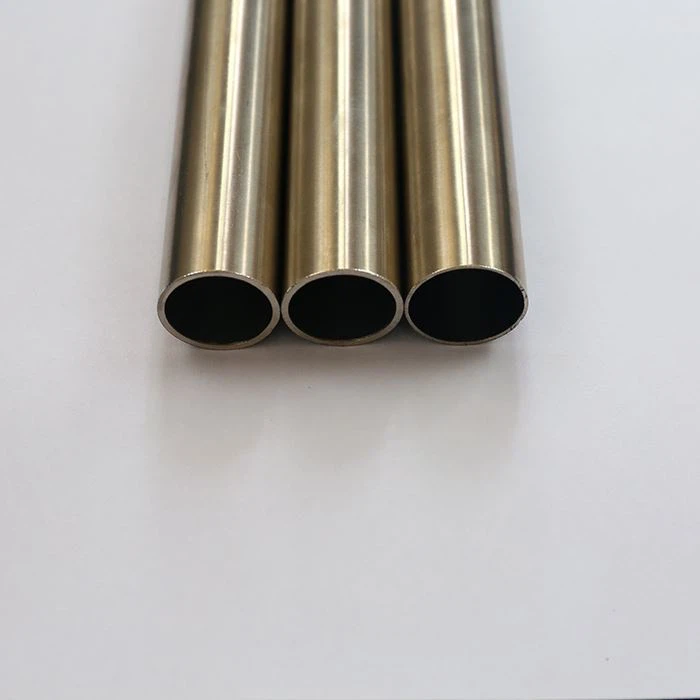
Q: What are the different grades of stainless steel pipes?
A: There are five main grades of stainless steel pipes: austenitic, ferritic, martensitic, duplex, and precipitation hardening. Each grade has unique properties and is suitable for different applications. For example, austenitic stainless steel is the most commonly used and is known for its high corrosion resistance, while martensitic stainless steel is stronger and more wear-resistant.
Q: How do I choose the right stainless steel grade for my project?
A: When selecting a stainless steel grade, it is important to consider the environment and conditions it will be exposed to, as well as the required strength, corrosion resistance, and cost. Consulting with a materials engineer or supplier can help you determine the best grade for your specific needs.
Q: What factors should I consider when selecting a stainless steel pipe?
A: The main factors to consider when selecting a stainless steel pipe are the grade, size, schedule, and shape. The grade will determine the corrosion resistance and strength of the pipe, while the size and schedule will affect its pressure and temperature capabilities. The shape can also impact its appearance and ease of installation.
Q: Can stainless steel pipes be welded?
A: Yes, stainless steel pipes can be welded using various welding techniques such as TIG, MIG, and stick welding. However, it is important to use the appropriate filler material and follow proper welding procedures to ensure a strong and corrosion-resistant joint. Some grades of stainless steel, such as austenitic, can also be welded without the need for additional filler material.
Q: How to clean stainless steel pipes?
A: While cleaning stainless steel, use mild non-scratching abrasive powders, and avoid using standard carbon steel brushes or steel wool. It can leave articles embedded on the surface, which can trigger rusting. You can use organic solvents to remove stains that are fresh and have not yet oxidized or decomposed.
Q: How do you keep stainless steel pipes from rusting?
A: When exposed to rain, humidity, or other moisture sources, implement protective measures such as covers, enclosures, or specialized coatings resistant to moisture. The key strategy in preventing rust is to hinder direct contact between steel and water.
Q: How do you store stainless steel pipes?
A: Avoid puddles in the warehouse, for example. The quality of stainless steel pipes will be impacted by prolonged contact with water, even though it is not susceptible to rust. Stainless steel seamless pipes should be kept free from humid air by keeping the warehouse well air-conditioned.
Q: What is stainless steel pipe made of?
A: Stainless steel pipe is primarily used in piping systems for the transport of fluids or gases. We manufacture steel pipe from a steel alloy containing nickel as well as chromium, which give stainless steel its corrosion-resistant properties.
Q: What is the life expectancy of stainless steel pipes?
A: Stainless steel pipe is known for its longevity, making it a cost-effective choice for businesses. With proper installation and maintenance, stainless steel piping can last for decades without needing to be replaced.
Q: What is the difference between a stainless steel pipe and stainless steel tubes?
A: However, there are significant differences between steel pipe and steel tube. A pipe is round. A tube can be round, square, rectangular, or oval in shape. Pipes are primarily designed to carry fluids and gases, regardless of the industry in which they are deployed.
Q: Will a magnet stick to stainless steel pipe?
A: All stainless steel metals are a type of steel. That means their chemical composition contains iron. In most cases, stainless steel varieties with iron in their composition are magnetic. If the alloy has an austenitic crystal structure, then it's not magnetic.
Q: Can I bend stainless steel pipe?
A: Short answer is yes, however generally it is a difficult material to work with. There are many different grades of stainless material available however we will just look at the 2 main types that people want to bend, these being 304 and 316.
Q: What is the most common stainless steel pipe?
A: Type 304 stainless steel is perhaps the most common type used because it is corrosion-resistant and easy to sanitize. This type of steel is often used for food and beverage applications or in building applications.
Q: What is the difference between 304 and 316 stainless steel pipe?
A: The key difference between 304 and 316 stainless steel pipe that makes them different is the addition of molybdenum, an alloy that drastically enhances corrosion resistance, especially for more saline or chloride-exposed environments. 316 stainless steel contains molybdenum, but 304 does not.
Q: What is the diameter of a stainless steel pipe?
A: Stainless Steel Pipe Sizes are specified in inches or millimeters. Generally, these pipes have a nominal bore between 1/8 to 24 inches or more as per the requirements. A Standard Ss Pipe Sizes In Mm has an outer diameter between 10.3 to 609.6mm.
Q: What is the standard code for stainless steel pipe?
A: The code for stainless steel pipe is ASTM A312. This code is an international material standard for the manufacture of stainless steel pipe, developed by the American Society for Testing and Materials (ASTM).
Q: How is standard steel pipe size specified?
A: The most common format of pipe sizing is written like: 1” SCH 40 x 20'. The first part is the nominal pipe size, which means that the outside diameter is actually 1.315”. After the NPS we have the wall thickness, or schedule. SCH 40 for a 1” pipe means the wall thickness is 0.133”.
Q: Are stainless steel pipes suitable for food and beverage processing?
A: Stainless steel pipes are commonly used in food and beverage processing industries due to their hygienic properties, corrosion resistance, and ease of cleaning.
Q: Can stainless steel pipes be polished for a mirror-like finish?
A: Stainless steel pipes can be polished to achieve a mirror-like finish, enhancing their aesthetic appeal and making them suitable for decorative applications.
Q: Can stainless steel pipes be used in corrosive environments such as marine applications?
A: Stainless steel pipes are ideal for corrosive environments like marine applications due to their superior corrosion resistance and longevity in saltwater conditions.


 Language