




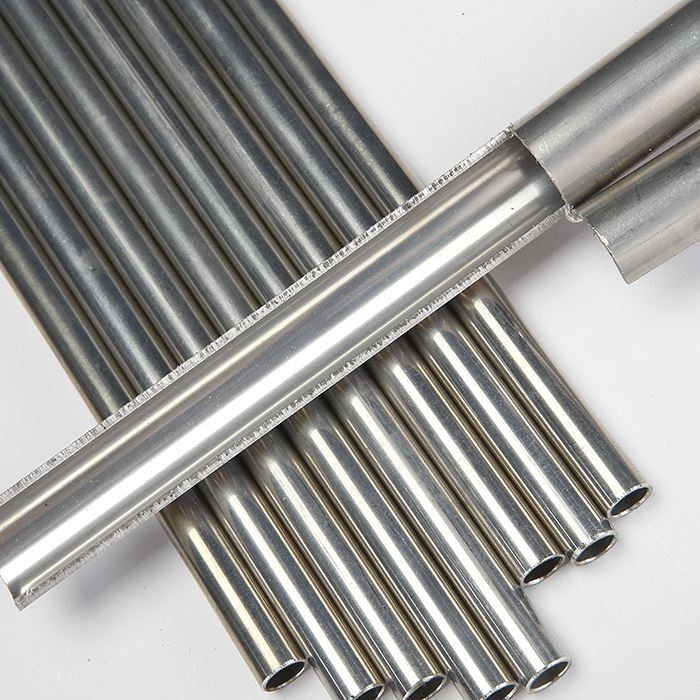
What is the surface finish of 304 stainless steel tubing?
 Oct 28, 2025|
 Hey there! As a supplier of 304 Stainless Steel Tubing, I often get asked about the surface finish of this popular tubing. So, I thought I'd take a few minutes to break it down for you and explain what it's all about.
First off, let's talk about what 304 stainless steel is. It's a type of austenitic stainless steel that's known for its excellent corrosion resistance, high strength, and good formability. These properties make it a top choice for a wide range of applications, from food processing and medical equipment to architectural structures and automotive parts.
Now, when it comes to the surface finish of 304 stainless steel tubing, there are several options available, each with its own unique characteristics and benefits. Let's take a closer look at some of the most common surface finishes:
Mill Finish
The mill finish is the most basic surface finish you'll find on 304 stainless steel tubing. It's the finish that the tubing comes with straight from the mill, and it's typically a dull, matte finish. This finish is achieved during the manufacturing process and is not further processed or polished.
Mill finish tubing is often used in applications where appearance isn't a major concern, such as in structural or industrial applications. It's also a good choice for applications where the tubing will be painted or coated later on.
Mechanical Polished Finish
Mechanical polishing is a process that involves using abrasive materials to smooth and polish the surface of the tubing. This can be done using a variety of methods, such as sanding, grinding, or buffing. The result is a smooth, shiny finish that can range from a satin finish to a mirror finish, depending on the level of polishing.
Mechanical polished finish tubing is commonly used in applications where appearance is important, such as in architectural or decorative applications. It's also used in applications where a smooth surface is required to prevent the buildup of dirt, debris, or bacteria, such as in food processing or medical equipment.
Electropolished Finish
Electropolishing is an electrochemical process that removes a thin layer of material from the surface of the tubing, resulting in a smooth, bright finish. This process not only improves the appearance of the tubing but also enhances its corrosion resistance and cleanliness.
Electropolished finish tubing is often used in applications where a high level of cleanliness and corrosion resistance is required, such as in the pharmaceutical, biotechnology, and semiconductor industries. It's also used in applications where a smooth surface is needed to prevent the adhesion of contaminants, such as in food and beverage processing. You can check out our Electropolished Stainless Steel Tubing for more details.
Passivated Finish
Passivation is a chemical process that removes free iron and other contaminants from the surface of the tubing, creating a protective oxide layer that enhances its corrosion resistance. This process is typically done after the tubing has been fabricated or welded to restore its corrosion resistance.
Passivated finish tubing is commonly used in applications where corrosion resistance is a critical factor, such as in marine, chemical, and petrochemical industries. It's also used in applications where the tubing will be exposed to harsh environments or corrosive substances.
Bead Blasted Finish
Bead blasting is a process that involves propelling small glass or ceramic beads at high speed onto the surface of the tubing, creating a uniform, matte finish. This finish is often used to improve the appearance of the tubing and to provide a non-slip surface.
Bead blasted finish tubing is commonly used in applications where a decorative or functional finish is required, such as in architectural, automotive, or consumer product applications. It's also used in applications where a smooth, non-reflective surface is needed to reduce glare, such as in lighting fixtures or display cases.
Pickled Finish
Pickling is a chemical process that removes scale, rust, and other contaminants from the surface of the tubing, leaving a clean, smooth finish. This process is typically done after the tubing has been heat-treated or welded to remove any oxidation or discoloration.
Pickled finish tubing is often used in applications where a clean, corrosion-resistant surface is required, such as in the chemical, pharmaceutical, and food processing industries. It's also used in applications where the tubing will be further processed or coated later on.
So, there you have it! Those are some of the most common surface finishes you'll find on 304 stainless steel tubing. Each finish has its own unique characteristics and benefits, and the right finish for your application will depend on a variety of factors, such as appearance, corrosion resistance, cleanliness, and functionality.
If you're in the market for 304 stainless steel tubing, we've got you covered. We offer a wide range of high-quality tubing with different surface finishes to meet your specific needs. Whether you're looking for High Precision Stainless Steel Tubing for a precision application or Stainless Exhaust Tube for your automotive project, we've got the perfect solution for you.
If you have any questions or need help choosing the right surface finish for your application, don't hesitate to reach out. We're here to help you make the best decision for your project. Contact us today to start the conversation and let's work together to find the perfect 304 stainless steel tubing for you.

References
- ASM Handbook, Volume 13A: Corrosion: Fundamentals, Testing, and Protection
- Stainless Steel World Americas
- The Fabricator