




What is the formability of 316l stainless steel tubing?
 Oct 21, 2025|
 What is the formability of 316l stainless steel tubing?
As a reliable supplier of 316l Stainless Steel Tubing, I've witnessed firsthand the widespread use and versatility of this remarkable material in various industries. In this blog, I'll delve into the formability of 316l stainless steel tubing, exploring its characteristics, influencing factors, and the implications for different applications.
Understanding 316l Stainless Steel Tubing
316l stainless steel is a low-carbon variant of the 316 grade, which contains molybdenum. The addition of molybdenum enhances its corrosion resistance, especially in environments containing chlorides. The "l" in 316l stands for "low carbon," which reduces the risk of carbide precipitation during welding, making it suitable for applications where weldability is crucial.
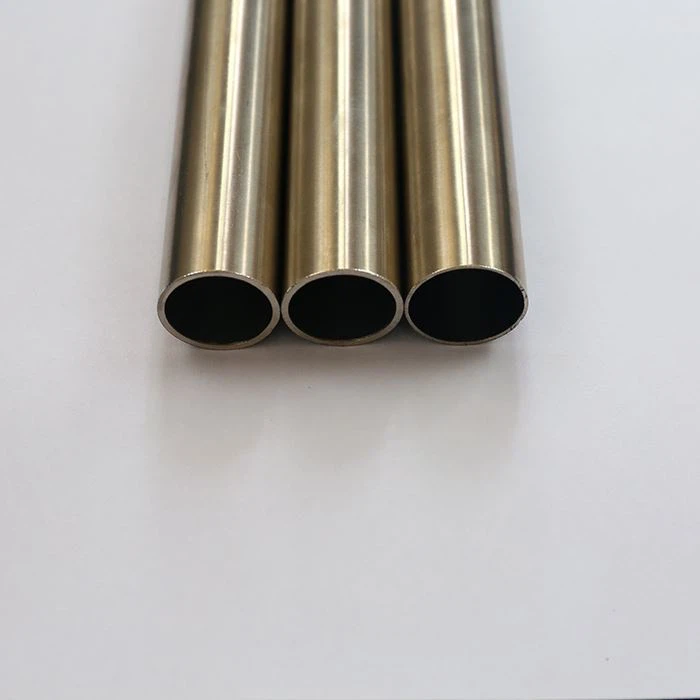
316l stainless steel tubing is available in various forms, including seamless and welded tubes. Seamless tubes are produced by piercing a solid billet, resulting in a continuous and uniform structure. Welded tubes, on the other hand, are made by rolling a flat strip and welding the edges together. Both types have their own advantages and are used in different applications.
Formability of 316l Stainless Steel Tubing
Formability refers to the ability of a material to be shaped into a desired form without cracking or fracturing. In the case of 316l stainless steel tubing, formability is influenced by several factors, including its chemical composition, mechanical properties, and the forming process used.
Chemical Composition: The chemical composition of 316l stainless steel plays a crucial role in its formability. The presence of elements such as chromium, nickel, and molybdenum enhances its corrosion resistance and ductility. Chromium forms a passive oxide layer on the surface of the steel, protecting it from corrosion. Nickel improves the toughness and ductility of the steel, while molybdenum enhances its resistance to pitting and crevice corrosion.
Mechanical Properties: The mechanical properties of 316l stainless steel tubing, such as its yield strength, tensile strength, and elongation, also affect its formability. Yield strength is the stress at which the material begins to deform plastically, while tensile strength is the maximum stress the material can withstand before breaking. Elongation is a measure of the material's ability to stretch before fracturing. A material with high elongation is more formable than one with low elongation.
Forming Process: The forming process used to shape the 316l stainless steel tubing also has a significant impact on its formability. Common forming processes include bending, stretching, and rolling. Each process has its own requirements and limitations, and the choice of process depends on the desired shape and dimensions of the final product.

Factors Affecting Formability
In addition to the chemical composition, mechanical properties, and forming process, several other factors can affect the formability of 316l stainless steel tubing. These factors include:
Temperature: The temperature at which the forming process is carried out can have a significant impact on the formability of 316l stainless steel tubing. Generally, higher temperatures improve the formability of the material by reducing its yield strength and increasing its ductility. However, excessive temperatures can also cause the material to lose its strength and hardness.
Strain Rate: The strain rate, or the rate at which the material is deformed, can also affect its formability. Higher strain rates can lead to increased work hardening, which can reduce the formability of the material. Therefore, it is important to control the strain rate during the forming process to ensure optimal formability.
Surface Condition: The surface condition of the 316l stainless steel tubing can also affect its formability. A smooth and clean surface reduces friction and allows the material to flow more easily during the forming process. On the other hand, a rough or contaminated surface can cause the material to stick or crack, reducing its formability.
Applications of 316l Stainless Steel Tubing
Due to its excellent formability and corrosion resistance, 316l stainless steel tubing is widely used in various industries, including:
Food and Beverage Industry: 316l stainless steel tubing is commonly used in the food and beverage industry for applications such as milk processing, brewing, and wine making. Its corrosion resistance and hygienic properties make it suitable for handling food and beverages without contamination. You can learn more about Sanitary Stainless Steel Tubing on our website.
Pharmaceutical Industry: In the pharmaceutical industry, 316l stainless steel tubing is used for applications such as drug manufacturing, packaging, and delivery. Its high corrosion resistance and biocompatibility make it suitable for handling pharmaceutical products without affecting their quality.
Chemical Industry: 316l stainless steel tubing is also widely used in the chemical industry for applications such as chemical processing, storage, and transportation. Its resistance to corrosion and high temperatures makes it suitable for handling a wide range of chemicals.
Architecture and Construction: In the architecture and construction industry, 316l stainless steel tubing is used for applications such as handrails, balustrades, and structural supports. Its aesthetic appeal and durability make it a popular choice for both interior and exterior applications.
Conclusion
In conclusion, the formability of 316l stainless steel tubing is influenced by several factors, including its chemical composition, mechanical properties, and the forming process used. By understanding these factors and choosing the appropriate forming process, it is possible to achieve optimal formability and produce high-quality 316l stainless steel tubing products.
As a supplier of 316l Stainless Steel Tubing, we are committed to providing our customers with high-quality products and excellent service. If you are interested in purchasing 316l stainless steel tubing or have any questions about its formability or applications, please feel free to contact us. We look forward to working with you to meet your specific needs.
References
- ASM Handbook, Volume 1: Properties and Selection: Irons, Steels, and High-Performance Alloys. ASM International, 1990.
- Metals Handbook, Volume 8: Mechanical Testing and Evaluation. ASM International, 2000.
- Stainless Steel: A Practical Guide. The Nickel Institute, 2002.