




What is the difference between seamless steel round pipes and titanium pipes?
 Nov 11, 2025|
 In the world of industrial piping, seamless steel round pipes and titanium pipes are two prominent players, each with its unique characteristics and applications. As a supplier of seamless steel round pipes, I've witnessed firsthand the diverse needs of our clients and the distinct advantages that different types of pipes offer. In this blog, I'll delve into the differences between seamless steel round pipes and titanium pipes, exploring their properties, applications, and cost factors.
Material Composition and Properties
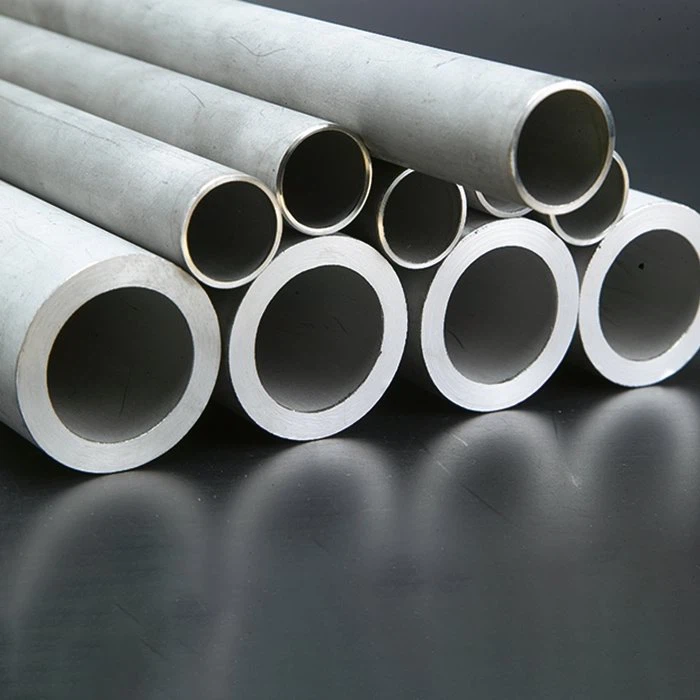
Seamless steel round pipes are primarily made from steel, an alloy of iron and carbon, with other elements such as manganese, silicon, and sulfur added in varying amounts to enhance specific properties. The seamless manufacturing process involves piercing a solid billet to create a hollow tube, resulting in a pipe with a uniform wall thickness and a smooth interior surface. This process eliminates the weak points associated with welded seams, making seamless steel pipes stronger and more reliable under high pressure and stress.
Steel pipes come in a wide range of grades and specifications, each tailored to specific applications. For example, Duplex Stainless Steel Pipe combines the strength of ferritic and austenitic stainless steels, offering excellent corrosion resistance and high mechanical properties. Seamless Precision Pipe is known for its tight dimensional tolerances and smooth surface finish, making it ideal for applications where precision is crucial. Stainless Steel 316l Pipe contains molybdenum, which enhances its resistance to pitting and crevice corrosion in chloride environments.
On the other hand, titanium pipes are made from titanium, a lightweight and strong metal with excellent corrosion resistance. Titanium has a high strength-to-weight ratio, making it ideal for applications where weight is a critical factor. It also has a low thermal expansion coefficient, which means it can maintain its shape and dimensions under extreme temperature changes. Titanium is highly resistant to corrosion in a wide range of environments, including seawater, acids, and alkalis, making it suitable for use in harsh chemical and marine applications.
Applications
The unique properties of seamless steel round pipes and titanium pipes make them suitable for different applications. Seamless steel pipes are widely used in various industries, including oil and gas, construction, automotive, and manufacturing. In the oil and gas industry, seamless steel pipes are used for transporting oil, gas, and other fluids over long distances. They are also used in the construction of offshore platforms, refineries, and pipelines. In the construction industry, seamless steel pipes are used for structural applications, such as building frames, bridges, and towers. They are also used in the automotive industry for manufacturing exhaust systems, chassis components, and engine parts.
Titanium pipes, on the other hand, are commonly used in applications where corrosion resistance, lightweight, and high strength are required. In the aerospace industry, titanium pipes are used for manufacturing aircraft engines, airframes, and hydraulic systems. They are also used in the marine industry for constructing ship hulls, propellers, and offshore structures. In the chemical industry, titanium pipes are used for transporting corrosive chemicals and acids. They are also used in the medical industry for manufacturing surgical implants and medical devices.
Cost Factors
The cost of seamless steel round pipes and titanium pipes can vary significantly depending on several factors, including the material grade, size, wall thickness, and manufacturing process. Generally, titanium pipes are more expensive than seamless steel pipes due to the high cost of titanium raw materials and the complex manufacturing process. Titanium is a relatively rare metal, and its extraction and processing require specialized equipment and techniques, which add to the overall cost.
However, the cost of seamless steel pipes can also vary depending on the grade and quality of the steel. High-grade stainless steel pipes, such as duplex stainless steel pipes, can be more expensive than standard carbon steel pipes due to the additional alloying elements and the more complex manufacturing process. In addition, the cost of seamless steel pipes can also be affected by market conditions, such as supply and demand, raw material prices, and energy costs.
Conclusion
In conclusion, seamless steel round pipes and titanium pipes are two distinct types of pipes with different properties, applications, and cost factors. Seamless steel pipes are strong, reliable, and widely used in various industries, while titanium pipes are lightweight, corrosion-resistant, and suitable for applications where high performance is required. As a supplier of seamless steel round pipes, we offer a wide range of products to meet the diverse needs of our clients. Whether you need a high-strength pipe for a construction project or a corrosion-resistant pipe for a chemical application, we can provide you with the right solution.

If you're interested in learning more about our seamless steel round pipes or have any questions about your piping needs, please don't hesitate to contact us. Our team of experts is always ready to assist you and provide you with the best advice and solutions. We look forward to working with you and helping you achieve your goals.
References
- ASM Handbook, Volume 1: Properties and Selection: Irons, Steels, and High-Performance Alloys
- Titanium: A Technical Guide, Second Edition
- Handbook of Stainless Steels